Top Dental Radiography Technology Trends for 2025
Dental radiography is an essential diagnostic tool, enabling practitioners to identify underlying pathologies that may not be apparent during a clinical examination. By providing a detailed view of the tooth and surrounding structures, it supports accurate diagnosis, treatment planning, and improved patient outcomes. In 2025, dental radiography is getting smarter, faster and more precise. New technology is making it easier for dentists to diagnose issues early, avoid guesswork and treat patients with greater accuracy. The best part? Patients benefit from shorter appointments, safer scans and fewer surprises. This article explores the most significant advancements in dental radiography technology for 2025. Designed for dental professionals seeking to stay at the forefront of diagnostic innovation, it highlights the latest tools, techniques, and industry shifts shaping clinical practice. Discover what’s changing in dental imaging and how these developments can enhance diagnostic accuracy, workflow efficiency, and patient care. 
AI-Powered Diagnostics: The New Dental Assistant
Artificial intelligence (AI) is rapidly transforming dental radiography in 2025, providing clinicians with a level of precision and efficiency that was previously unattainable. AI-powered diagnostic tools are now capable of analysing dental radiographs and 3D imaging to identify early indicators of caries, periodontal disease, bone loss, and even oral malignancies. These systems, trained on extensive datasets containing thousands of clinical images, are designed to detect subtle patterns that may elude even experienced practitioners. Research from King’s College London has demonstrated that AI can detect dental caries with over 90 per cent accuracy, in some cases identifying pathology not evident during routine clinical examination. For dental professionals, this technology offers faster, more reliable diagnostic support, reducing the risk of missed findings and enhancing clinical decision-making. Ultimately, it enables practitioners to deliver more efficient appointments, improved patient outcomes, and earlier intervention before minor concerns develop into complex treatment needs.
2. 3D Imaging and CBCT: A Deeper Dive into Oral Health
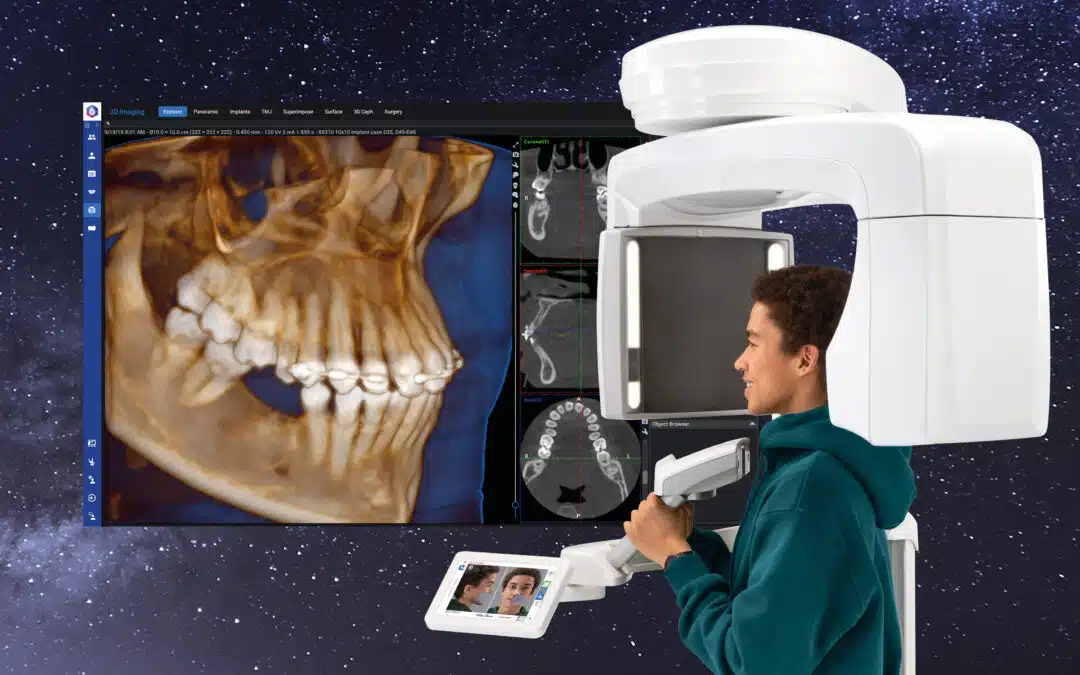
One of the biggest shifts in dental radiography is the move from flat 2D X-rays to full 3D imaging. Traditional dental X-rays can be helpful, but they often miss details hidden between teeth, below the gumline, or inside the jaw. That’s where 3D imaging, especially Cone Beam Computed Tomography (CBCT), makes a real difference. CBCT works by taking a series of images from different angles and assembling them into a complete 3D model of the patient’s mouth. This gives dentists a much clearer view of teeth, nerves, bone structure, and soft tissue. Unlike traditional X-rays, CBCT can reveal hidden infections, impacted teeth, and the exact condition of bone around a tooth or implant site. This kind of detailed imaging is incredibly useful for planning dental implants, root canals, and orthodontic treatments. Dentists can measure bone density, map nerve paths, and fit implants with higher precision, reducing the risk of complications. For patients, 3D visuals make it easier to understand what’s happening and why a certain procedure is needed. Seeing their own mouth in full 3D often leads to more trust, better communication, and fewer surprises during treatment. It’s a smarter way to deliver care, and it’s quickly becoming the new standard.
3. Portable and Wireless Radiography: Imaging on the Go
One of the most exciting changes in dental radiography for 2025 is the rise of portable and wireless systems. These compact devices are changing the way dentists deliver care, especially outside of the traditional clinic setting. In mobile clinics, schools, nursing homes, and even during dental emergencies, portability matters. Instead of moving patients or sending them to another location, clinicians can bring the imaging system to them. That’s a big win for both access and comfort. Wireless radiography tools speed up the whole process. They cut out cords, reduce setup time, and allow instant image capture and sharing. This means smoother workflows and less time waiting around for results. Notable innovations in this area include the Nomad Pro 2 handheld X-ray unit and DEXIS Titanium wireless sensors. Both systems are engineered for precision and practicality, offering lightweight, reliable solutions that maintain exceptional image quality, even in confined surgeries or temporary clinical environments. By making dental imaging faster, easier, and more flexible, portable radiography is opening the door to better care in more places.
4. Cloud-Based Storage: Access Anytime, Anywhere
Dental practices are ditching bulky filing cabinets and local hard drives in favor of the cloud. Cloud-based storage is becoming the go-to solution for managing dental radiography images, and it’s easy to see why. Cloud-based imaging systems now allow dental practitioners to store radiographs and 3D scans securely online, providing instant access from any location. This functionality is especially valuable for multi-site dental groups, specialists, and clinicians working across several practices. It also streamlines collaboration, enabling rapid file sharing and facilitating second opinions with minimal administrative burden. It also improves the patient experience. Dentists can pull up images instantly during appointments, which helps explain diagnoses more clearly and keeps treatment moving forward without delays. Security is a top priority too. Most dental cloud platforms use encryption and comply with UK GDPR and other relevant data protection regulations, ensuring sensitive health information is kept safe. In short, cloud storage doesn’t just save space. It makes daily tasks faster, supports better teamwork, and adds flexibility to how dental care is delivered. For modern practices, it’s a smart move.
5. Spectral Imaging: Sharper Images with Less Radiation
Spectral imaging is one of the newer technologies making waves in dental radiography. Unlike traditional X-rays, it captures images at different energy levels, which helps highlight subtle differences in tissues and materials inside the mouth. This technology produces sharper, higher-contrast images that make spotting cavities, fractures, or infections easier for dentists. At the same time, spectral imaging reduces the amount of radiation patients are exposed to—always a win when it comes to safety. Better images mean dentists can diagnose problems earlier and more accurately, leading to treatments that are less invasive and more effective. Patients benefit from clearer explanations and less worry about radiation risks. As spectral imaging technology becomes more affordable and accessible, it’s expected to see wider adoption in dental clinics by 2025, shaping a safer, clearer future for dental care.
6. Augmented Reality (AR) and Virtual Reality (VR): Enhancing Patient Engagement
Augmented reality (AR) and virtual reality (VR) are no longer just for gaming; they are making a big impact in dental radiography as well. These technologies overlay digital images onto real-world views or create fully immersive environments, helping dentists and patients visualize dental issues and treatments in new ways. AR and VR assist in treatment planning by showing patients 3D models of their teeth and jaws based on their dental radiography scans. This makes complex procedures easier to understand, reducing confusion and fear. Patients feel more engaged and less anxious when they see exactly what is happening inside their mouths. It also improves communication, helping dentists explain treatment steps clearly. Tools like 3Shape’s Dental System and Oculus VR are already being used to create interactive dental experiences, making patient visits more informative and a lot less scary.
7. AI in CBCT Imaging: Precision at Its Best
Artificial intelligence is taking CBCT imaging to a whole new level. By analysing 3D scans with advanced algorithms, AI can quickly identify lesions, bone defects, and other key features that might be tricky for the human eye to catch. This means dentists get more accurate and detailed information for diagnosis and treatment planning. AI helps reduce errors and speeds up decision-making, which can lead to better patient outcomes. Recent evidence shows that AI systems can match, and in some cases outperform, experts in analysing CBCT scans. A meta-analysis across 19 studies reported a pooled diagnostic accuracy of 0.93 for detection and segmentation tasks. In clinical trials using tools like Diagnocat, dentists aided by AI achieved significantly higher sensitivity and specificity compared to unaided diagnosis. Additionally, advanced deep-learning models achieved expert-level segmentation accuracy while processing scans hundreds of times faster. By combining AI with CBCT technology, dental professionals gain a powerful tool that enhances precision and confidence in complex cases. It’s a trend that’s expected to grow rapidly in 2025 and beyond.
8. Teledentistry: Bridging the Gap in Dental Care
Teledentistry is gaining momentum, thanks to advances in digital radiography and communication technology. By sharing dental X-rays and scans online, dentists can examine patients’ oral health remotely, opening doors to care for people in rural or underserved areas. This trend offers great convenience. Patients can get professional advice without traveling long distances, saving time and money. It also helps dentists triage urgent cases more efficiently. Digital radiographs are easily uploaded and securely shared through cloud platforms, allowing specialists to analyze images and offer second opinions without needing to be in the same room. As internet access and technology improve, teledentistry is expected to become a standard part of dental care, making quality treatment more accessible than ever before. This is a huge step forward in bridging healthcare gaps worldwide.
9. Enhanced Sensor Technology: Clearer Images, Better Diagnoses
Recent advances in dental radiography sensors are making a big difference in image quality and patient safety. New sensors capture higher-resolution images faster than before, allowing dentists to see details they might have missed with older equipment. At the same time, these sensors use less radiation, which means patients get clearer pictures with less exposure. This balance between clarity and safety is a huge win. For dental professionals, quicker image capture means smoother workflows and faster diagnoses, letting them spend more time caring for patients instead of waiting for images.
10. Integration with Practice Management Software: Streamlining Operations
Connecting dental radiography systems with practice management software is becoming a game changer for clinics. This integration helps keep everything in one place—from scheduling appointments to handling billing and storing patient records. With radiographs linked directly to patient files, dentists can quickly review images during visits without switching between different platforms. This seamless flow saves time and reduces mistakes. Administrative tasks like appointment reminders and insurance claims also become smoother, freeing staff to focus more on patient care. Leading dental software platforms such as Software of Excellence and Carestream Dental now provide seamless integration with radiography systems, enabling practices to unify diagnostic imaging with patient records and workflow management. This level of digital integration is rapidly becoming a core requirement for progressive dental practices in 2025, supporting both clinical efficiency and enhanced patient care.
Final thoughts
To sum up, dental radiography in 2025 is being transformed by AI-powered diagnostics, 3D imaging, portable systems, cloud storage, spectral imaging, AR/VR, and more. These trends not only improve the accuracy and speed of diagnoses but also enhance patient comfort and care. Staying updated with these innovations is essential for dental professionals who want to offer the best service and run their practices efficiently. Embracing these technologies will help dentists stay ahead in a rapidly evolving field and provide patients with smarter, safer dental care. Now is the perfect time to explore these tools and bring your practice into the future. Don’t wait, start integrating these cutting-edge technologies today to deliver the dental care your patients deserve. Anglian Dental can help you design, equip and support a fully future-ready surgery. Get in touch to find out how we can bring innovation into your practice.